
Why does communication become unstable in an interference environment?
In logistics, manufacturing, and facility settings, metals, terminals, sensors, conveying equipment, and other equipment are all located in the same space, resulting in a high concentration of overlapping radio waves.
In environments with a lot of metal, radio waves may not reach their intended destination reliably.
Metal shelves, racks, manufacturing equipment, fixtures, walls, and transported objects can cause reflections and obstructions, meaning communication quality is not determined solely by distance.
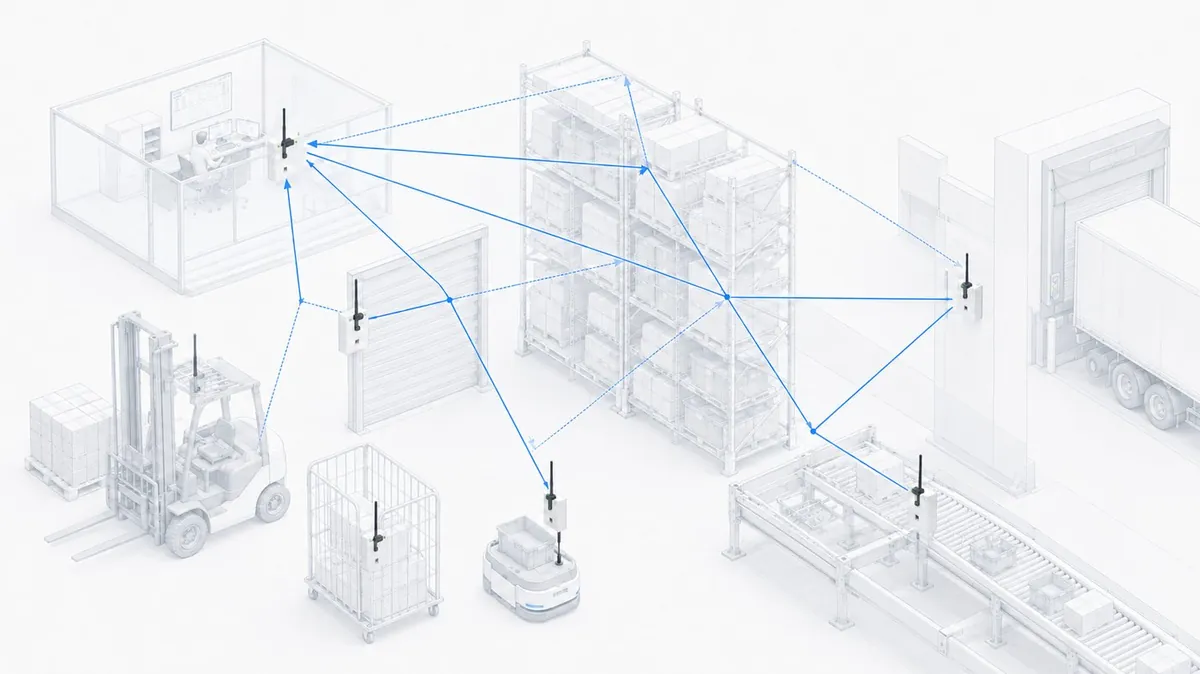
The more devices there are, the lower the success rate of communication becomes.
With multiple devices, simultaneous and close-range transmissions increase, making collisions and processing delays more likely on the receiving end. Even communication that works with a small number of devices may fall below practical standards in environments with many devices.
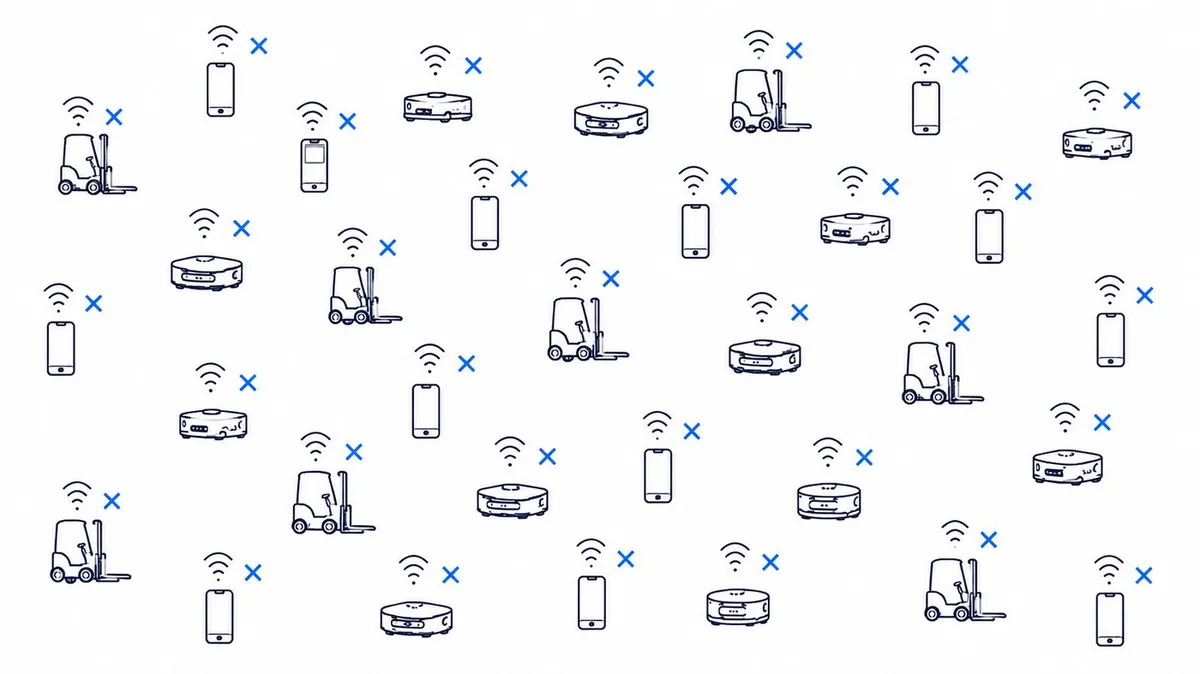
Uncontrollable ambient communications affect communication quality.
On-site, there are wireless LANs other than our own equipment, worker terminals, sensors, transport equipment, and communications from adjacent areas. When communications that cannot be adjusted in terms of transmission time or frequency by our own system overlap, even if the communication is valid according to the standards, the reception rate and distance measurement success rate may decrease in the actual environment.
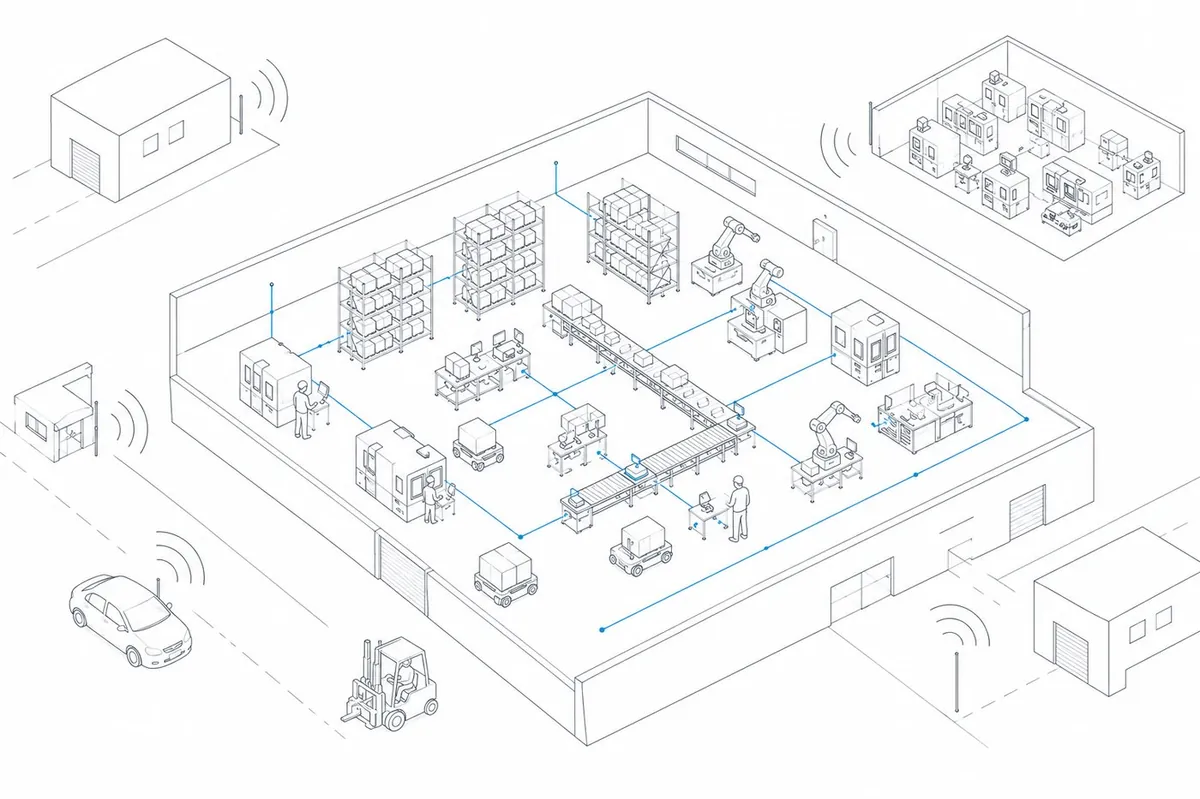
Existing interference countermeasures have limitations in real-world situations.
Existing technologies reduce interference by staggering communication times, using different frequency bands, and checking surrounding usage before transmission. However, in real-world situations, uncontrollable surrounding communications often enter the same time and frequency band, and publicly available documents report that even with these measures in place, the success rate of communication and ranging significantly decreases.[1][2][3]
It enables stable communication even in congested environments.
HAROAH incorporates proprietary technology that ensures stable communication even in high-density wireless environments. One example of its effectiveness is its ability to maintain communication even in environments simulating interference from 1000 devices. This proprietary technology includes intellectual property, including patent applications.
The following is third-party documentation that supports the background of the issue.